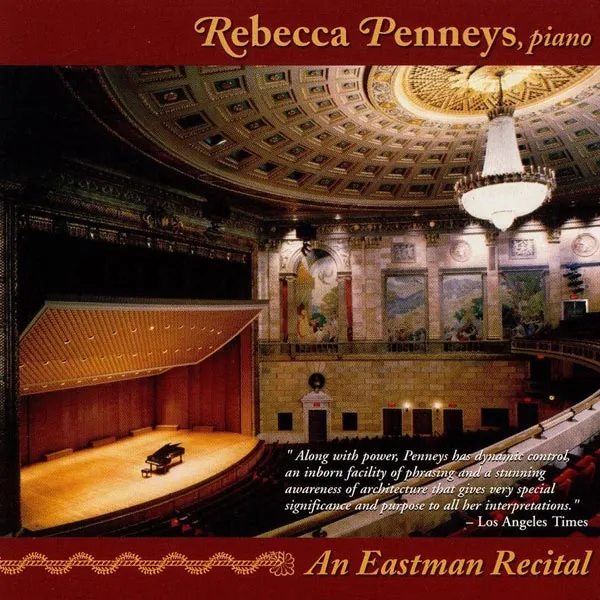
Chopin: Ballade No. 1, Op. 23 from "An Eastman Recital" by Rebecca Penneys (2011)
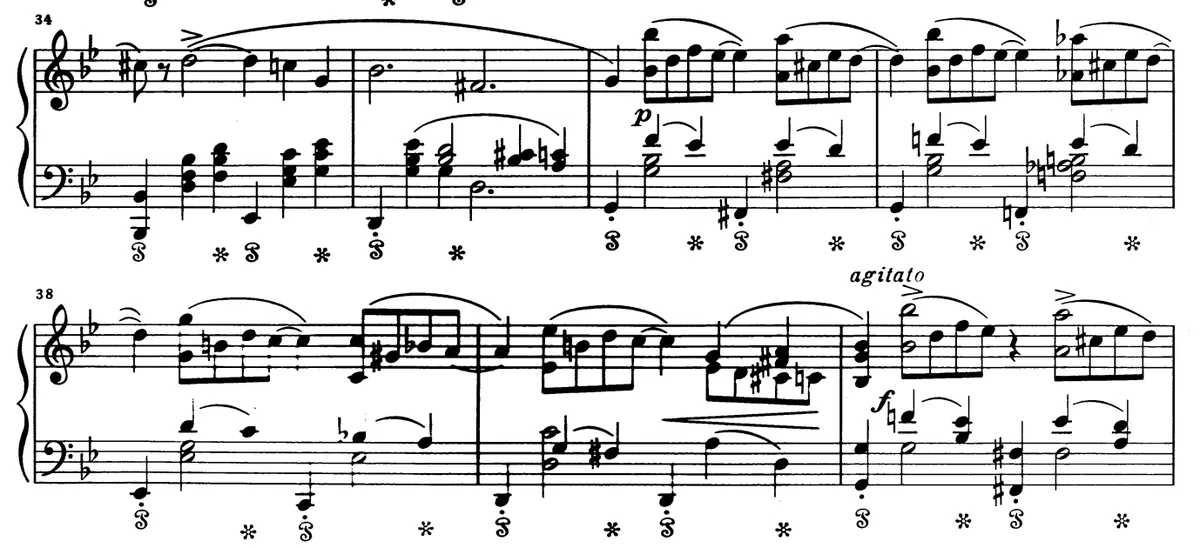
The first Ballade of Frederic Chopin is one of the most well-known pieces of romantic piano literature. It is a single, unbroken work which at first listen, you may not realize is teeming with brilliant manipulation and transformations of its themes, and has an underlying structure crafted with so much innovation – the kind we hadn’t seen much of at this point in time since the truly transformative genius of Ludwig van Beethoven. Instead, what you may notice is a brief, dark, dramatic opening, followed by an uninterrupted ten-minute display of themes that encompass such a wide spectrum of color and expressive power. Even the transitionary passages (see bars 36 through 67) are so rich with detail that there is enough material in there for Chopin to have turned them into stand-alone works.
To put it plainly, it is a beautiful piece which is so generous expressively that it serves as a common entry-point to romantic piano music for many listeners. For the same reason, it is also so tolerating of interpretative liberties – it is one of those works which some say is immune to bad interpretation. Being as beautiful as it is, it can be difficult to find a recording of this piece that is boring or unpleasant; which conversely, makes it nearly impossible to find a recording that even critics can say is the definitive version of the work. Although, there are certainly contenders. Members of the Zimerman cult for instance, will argue that his version is undoubtedly the definitive recording – and frankly, that claim can sometimes be hard to dispute. Zimerman's rendering of the Ballades from 1987 is a masterclass in tonal control, rhythmic accuracy, dynamism, and attention to structure. His playing has a steel-like quality to it, scales are glittery, and there is an extremely judicious use of pedal.
Penneys is not particularly well-known, but she has a decorated career as a competition pianist, a recitalist, and an educator. At the age of 17, Penneys participated in the 7th Chopin Competition in Warsaw, Poland (the year Martha Argerich won first prize!). She was the youngest contestant in that competition, and although she did not garner any of the top prizes, she was awarded instead an unprecedented Special Critics' Prize, created specifically to commend her performance in the competition. Needless to say, she is a fine pianist and interpreter of Chopin.
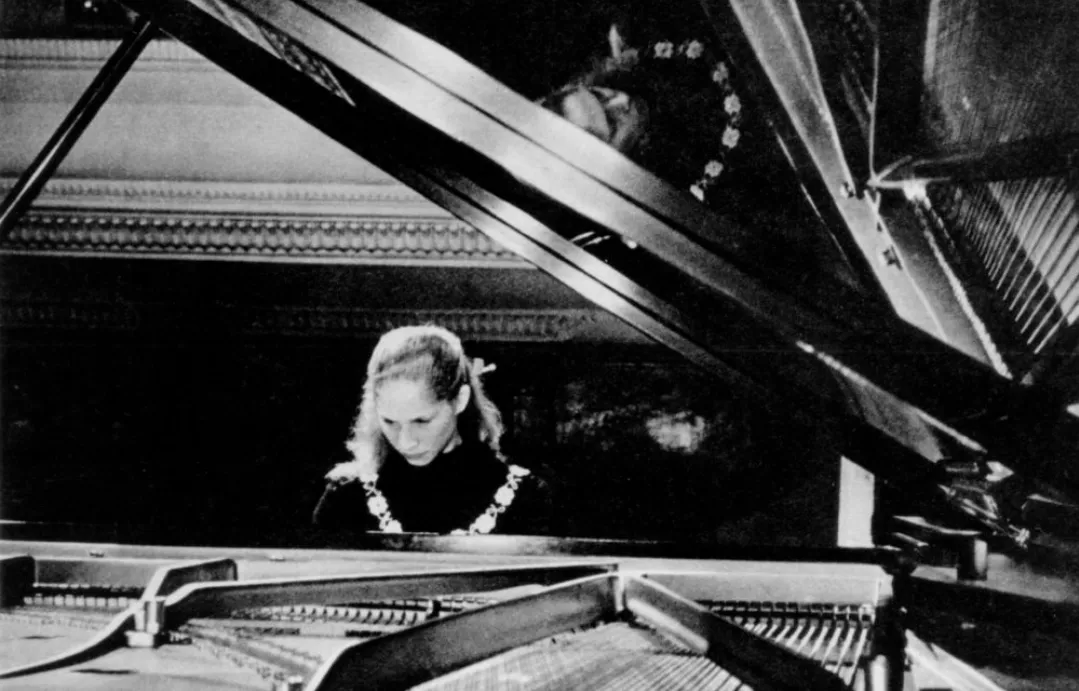
Penneys' treatment of the same work is a wonderful contrast to Zimerman. Her touch is incredibly light and the notes sound thin, as if playing with the very tips of her fingers – characteristics which lend themselves to the clarity and seemingly improvisatory sound of her playing (the waltz-like theme from bar 138 onwards is a highlight). That isn't to say she doesn't have a lovely singing tone. She handles the Meno mosso section (from bar 68) with great lyricism, owing to fine legato playing and also to frugal use of the sustain pedal, which immediately after, she is not afraid to use at the transformation of the first theme (from bar 82). On that note (pun not intended), she handles resonances exceedingly well. The initial attack of sound disperses as quickly as it comes, and there are no instances of overpedalling. The resulting sound I feel is clear and intimate, but others may also perceive it as dry and for lack of a better word, too note-y.
Penneys is very open to wide fluctuations in tempo – just note the blistering speed of the waltz-like third theme as it transitions back to the second theme (the Meno mosso) which is now transformed with brilliant blocked chords over arpeggios (compare bar 68 and bar 166). Penneys choice of tempo here is notably slower, choosing not to forego entirely the song-like quality and humility in which the theme was initially presented. This is in contrast to Zimerman who plunges into this section with great bravura as if declaring victory. Observe also the treatment of the first theme, initially presented in G minor (bar 8). Penneys approaches this with a lot of freedom, slowing down toward the end of each phrase to a great, haunting effect (I like to imagine a lone dancer trying to find her rhythm, but never quite getting there). She applies this same technique during the gorgeous transformation of the first theme (from bar 86), slowing down towards the top of each arpeggio, and the result is lovely dolce treatment which is so effective. The return of the first theme (now in A minor, bar 94) is much quicker, but this leads well with great tension into the first climax of the work (from bar 106). The first theme returns again before the second climax of the work (the coda, from bar 208); this time, in D minor, the dominant minor. Here, Penneys returns closely to her original tempo, restoring the theme's haunting quality, as if dreading the tumultous Presto con fuoco coda.
The coda is a highlight of the performance. Even at the final climax, there is great discipline with the use of the sustain pedal. Her choice of tempo is quick, but slower than many recordings. The result is a dry, skittish take on the coda which allows the listener to pay attention to the frantic dance-like qualities of the section. Where many play this with blistering speed, the tempo highlights the interplay between the left and right-hand figurations, with fantastic voicing work on the left hand which is often lost in a flurry of notes.
Penneys offers a refreshing performance in a sea of Ballade No. 1 recordings, which is proof that a work with such incredible magnitude and emotional depth can be effectively performed with lightness and air, just as it can with steely, sonorous intensity.
But don't take my word for it. Listen for yourself!
Listen here: https://youtu.be/nTyOTH5zh5E?si=3MA9OmpbnzBOoD_T